No Dig, No Ride

Photo by Rhys Abel on Pexels.com

One aspect of riding bikes in the dirt is that there will always be opportunities to make the trail better. At times, the trail may need to be made safer, such as removing huge trees which have fallen. Other times there may be a need to divert water off, or away from, the trail. And then there’s the really fun way of making trails better: adding features.

Of course adding features is the fun part, but the safety part really does come first. The last thing anyone wants is for the newbies to get hurt. They’re the future of sports, so we want to make the trails safe for them.

Before I get you thinking that making a trail safe is all about removing hazards, let me make it clear, that’s not always the case. In the case of a tree falling across a trail, especially if it’s on a turn, or down a drop, or anywhere it’s not visible right away, then it has to be removed so people don’t get killed. Some obstacles can be left on the trail and made safe by signs warning any riders that a significant obstacle is coming up.

In fact, some of the best trails have difficult sections and easy sections, so anyone and everyone, no matter their skill level, can enjoy them.

All that said, the point of this article is to get people interested in making their own features to make the trails near them better.

Do you enjoy jumps? With a shovel and some water you can make some sweet jumps. Mound up the dirt. Get it a little wet, then smack it into the shape you want.

Do you enjoy berms? These beauties can be shaped with the same tools as are used to make jumps.

Do you enjoy riding skinnies? A good skinny can take a bit more craftsmanship, but the tools can be as simple as a hatchet or as complicated as a chainsaw and a drill. The most complicated is of course by using no nails or screws.

Do you enjoy bridges? These are like skinnies, except usually wide enough so riders can pass each other going opposite directions. They require some carpentry skill to build properly.

Dirt and wood are what the above are commonly made of, but there is a way to build all of the above using rocks. To make jumps, berms, skinnies, and bridges out of rocks takes a huge amount of patience as well as a great deal of spatial recognition. If you don’t have either of those, start small until you’ve developed those skills. Otherwise, stick to building with dirt and wood.

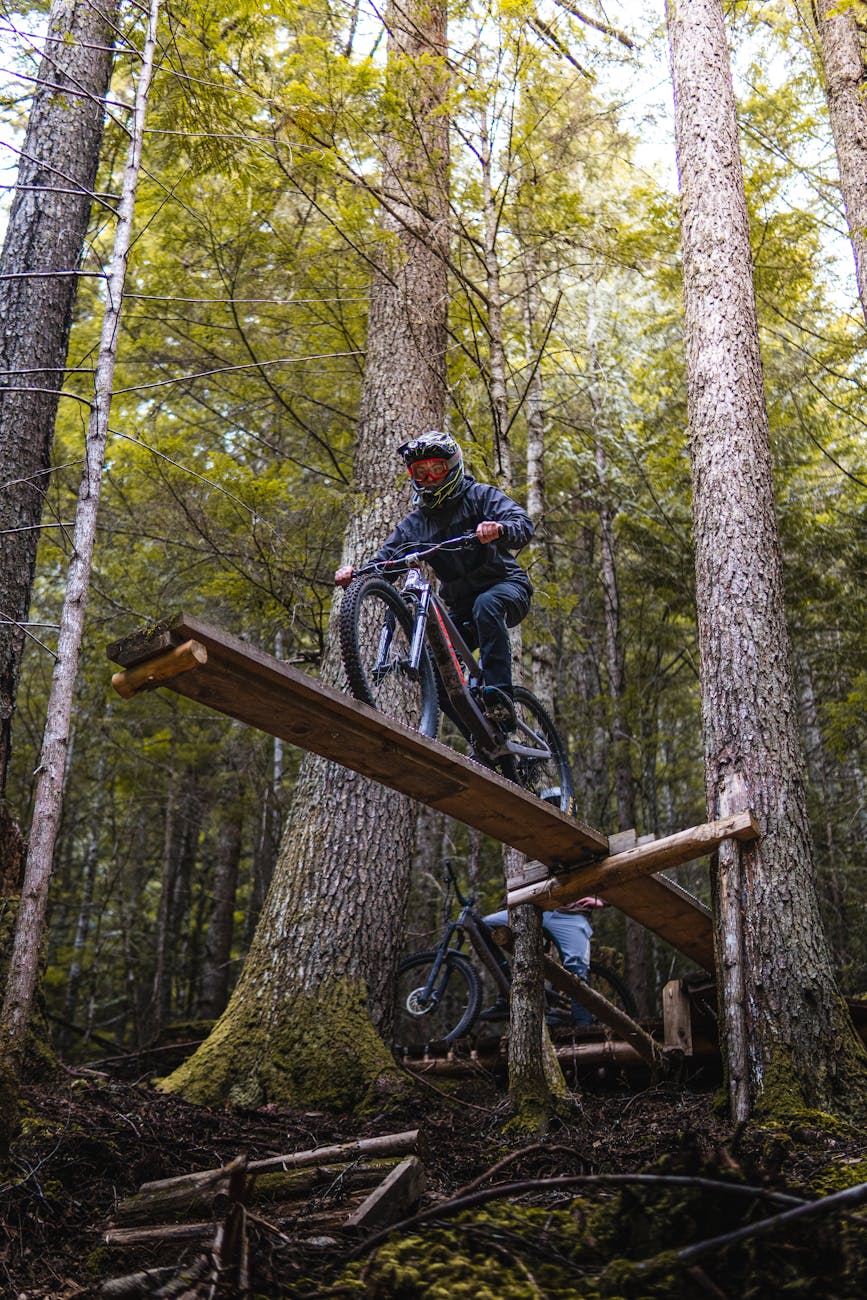
The last feature I want to bring to your attention is the seesaw. It’s what is pictured at the beginning of this article. They can be built right, and they can be built poorly. The good ones are balanced in such a way as to return to one side or the other but never hover above the ground. In other words, one side is weighted so the rider knows to enter on that side.

If you’re not sure what any of the previously mentioned features are, you can check your local YouTube…or you can check your local trail system. I bet you can guess which one I would recommend.

Enjoy Bike Month!!!
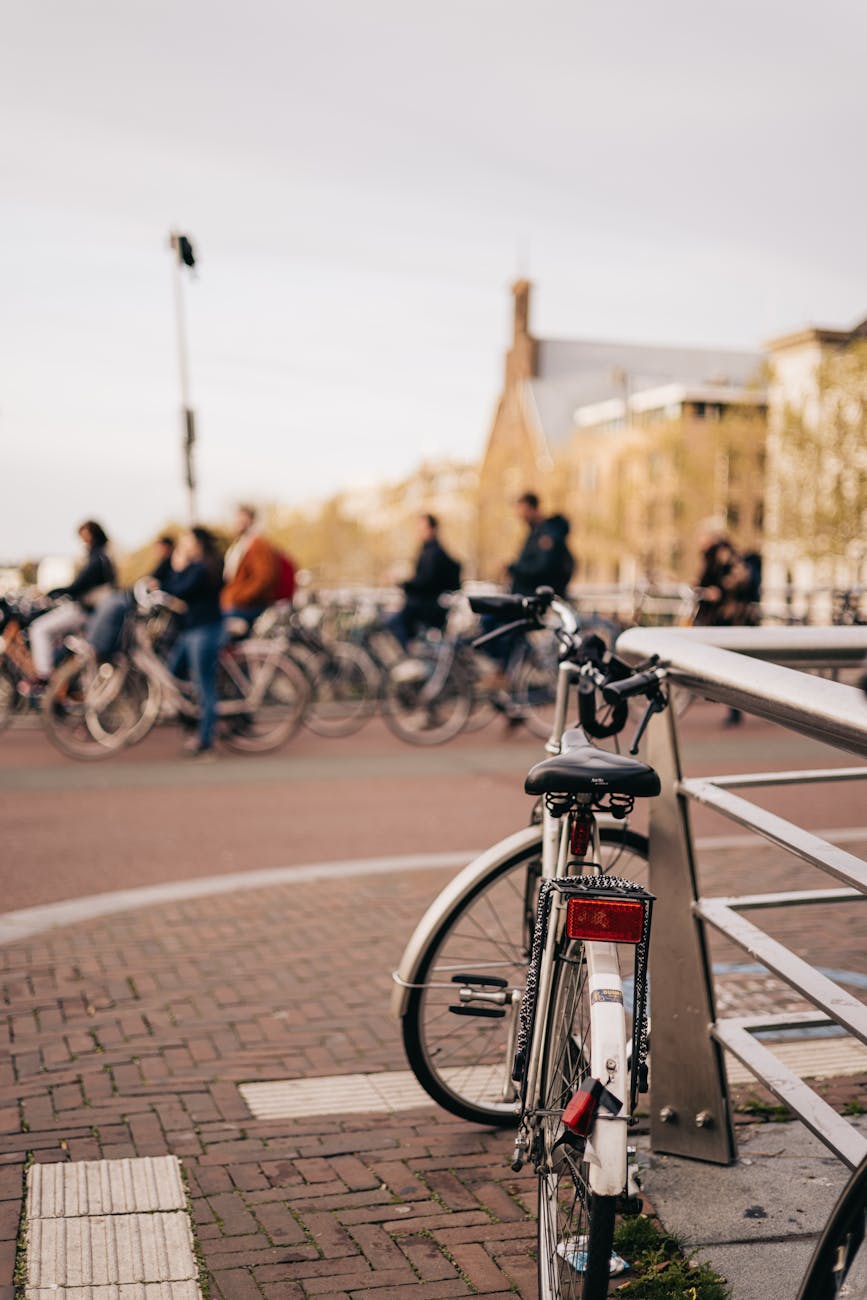
Bicycle Time

Photo by Diane Garcia on Pexels.com

June is bike month. Bike month begins with beautiful weather. It’s difficult to spend any time indoors on an electronic device when the trails are beckoning and the weather is fabulous.

But first…

…it’s time to invite some friends.

The trails are calling my name, your name, everyone’s name, so we may as well make it a group event.

Let’s go ride a bike.

Sure biking can be done solo, but isn’t it so much more fun with some friends? Isn’t it much better with a group, especially if the group is full of people you love/admire/respect?

Photo by Lisett Kruusimu00e4e on Pexels.com

Project Bike

Photo by Ligin Lee on Pexels.com

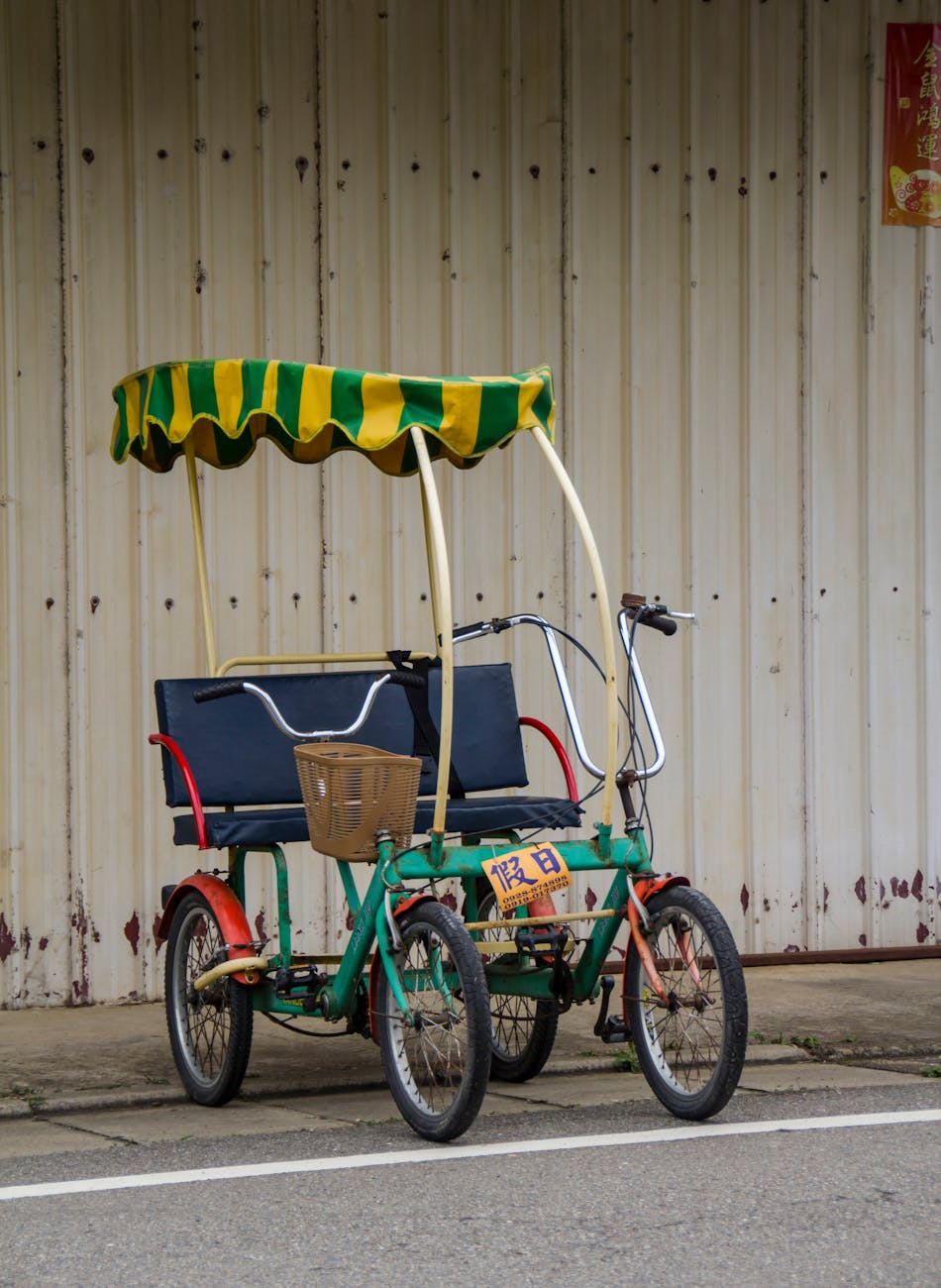
As many of my biking friends do, I have a project bike.

It’s fun for some of us to crank on a bike and make it closer to what we dream of a bike being. Not only that, but it’s fun to see what different styles of bikes are out there (see just about any of my previous articles on bikes) and to find one you like. It’s fun to make an old bike new or to restore a classic.

Well, I suppose I should be more accurate and say I HAD a project bike. Mine blew up the other day when I was just messing around on it. Praise the Good Lord I wasn’t in the mountains, I was just tooling around town when it exploded, so there wasn’t far to go after the horrific accident.

Okay, more honesty: I’m begging for sympathy here. There was no horrific accident. It was more of a traumatic moment specifically located in my brain. Sad really. I spent a lot of time building up the bike only to have the frame give out on me. Granted it’s an old bike frame. Things like that don’t last forever.

So, now what? Like those friends I mentioned do, I’ll start over, find another frame, start putting things together and have myself a new project bike. By the way, my bike had no seat. That’s because I wasn’t quite done yet. I had everything but the seat. In fact, my ride when the frame broke was intended to get me to the local bike shop so I could get a seatpost fitted and then a seat. Hopefully next time I can finish.

Art Teacher

Photo by cottonbro studio on Pexels.com

Anyone can be an art teacher. Watch me do it. Free lesson!

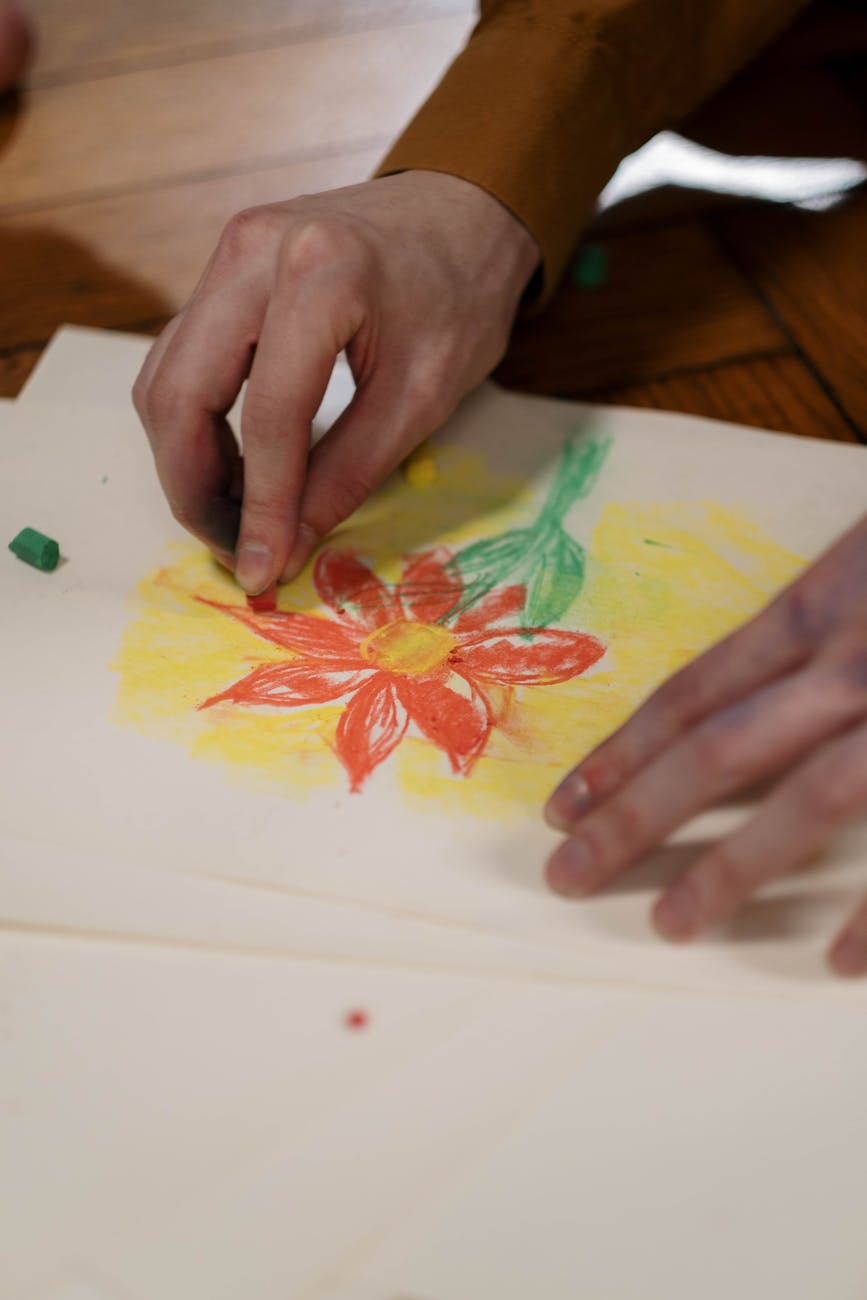
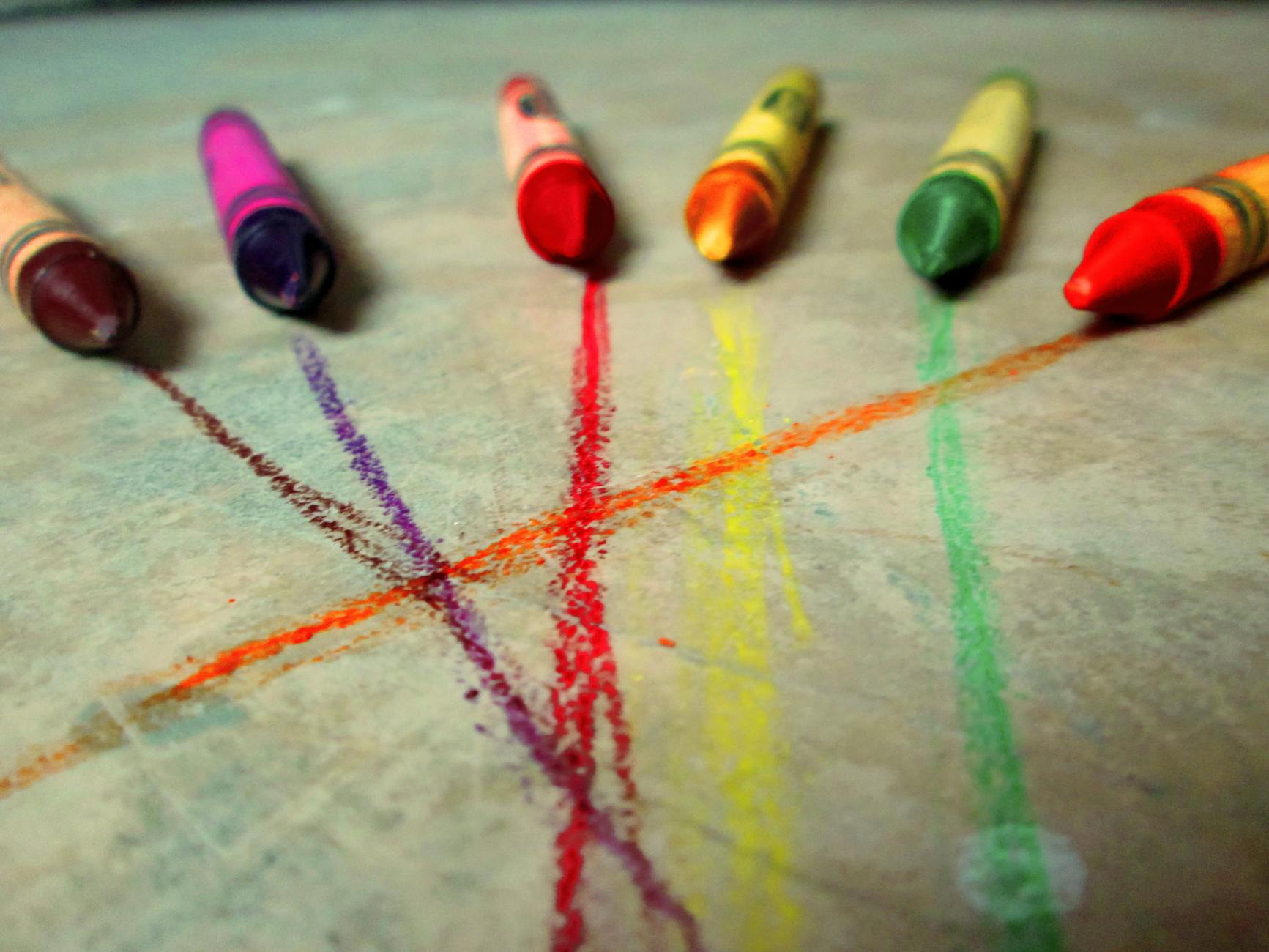
Rule number one: art is everywhere, all around us. Along with that, anything you call art IS ART! Bammo, whamo! Now you know, you can go color something with crayons. A wall, a window, the wood slats under your bunk bed, it doesn’t matter. Crayons are most great artists’ inroductory medium.

Pens and pencils may be next, though some folks may argue that charcoal is before those.

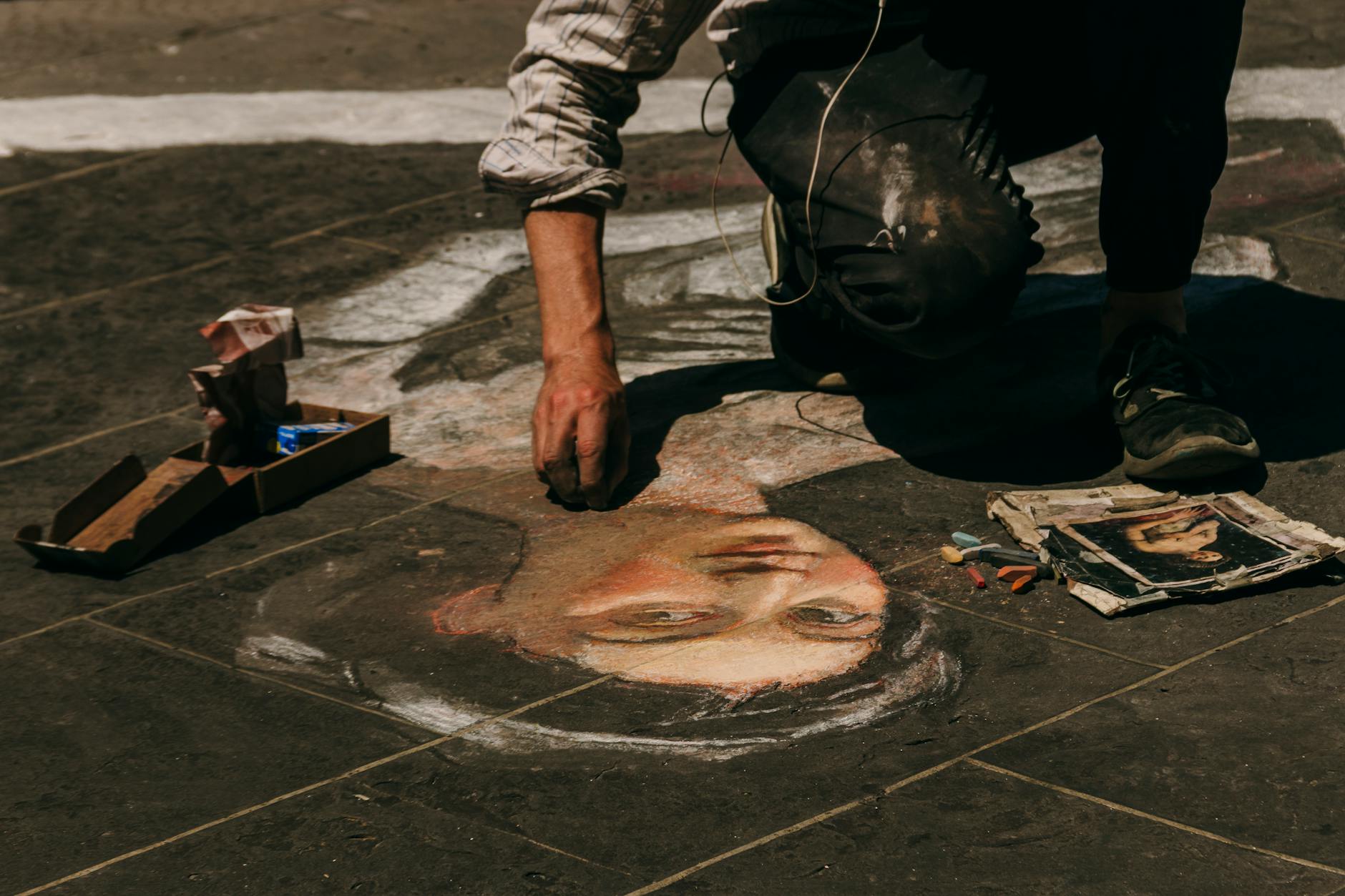
Charcoal can be interesting because it works on most surfaces. Charcoal and chalk work well on concrete. To remove it, just wait for rain.

Photo by Marcelo Aut on Pexels.com

Pencils are great because you can erase the lines and shades you made. If you use an eraser, just remember to not erase too hard near the edge of the paper or you could rip it. That’s probably rule number two, but who’s counting these silly rules anyway?

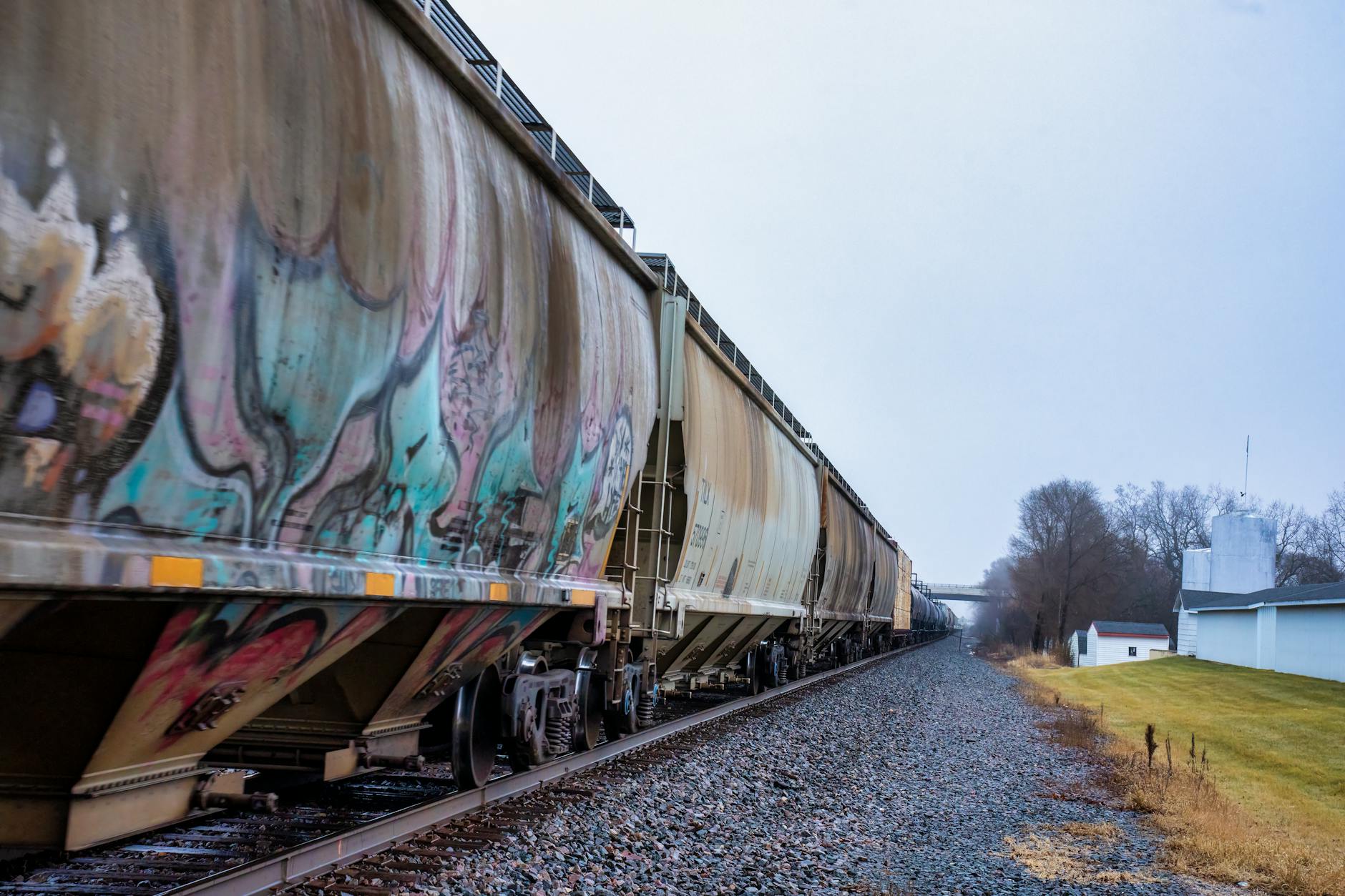
Here’s another thing about art: it should be about stuff you like. So, for instance, if you happen to like cars you should either paint cars or paint cars, you know what I mean? Some people really like train cars because I see they paint train cars a lot. There are miles of paint, and miles and miles of art. Perhaps too there’s something satisfying about having your art travel to other states, other countries. Paint your mural and say goodbye.

Photo by Tom Fisk on Pexels.com

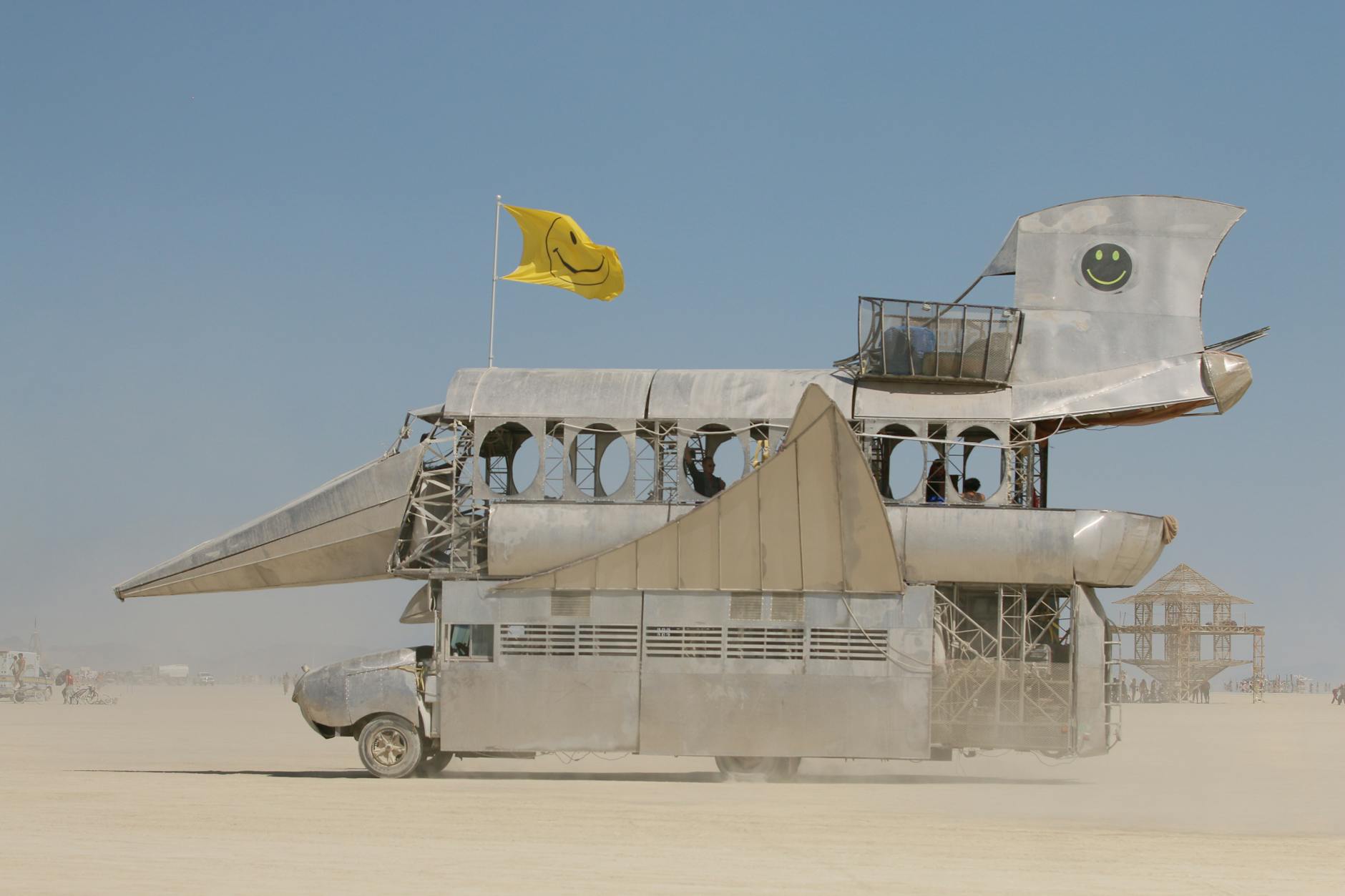
If you wanted greater mileage, you’d paint rockets.

If you wanted greater visibility, you’d paint the backdrops for the local news. Paint your mural across the weather channel’s map.

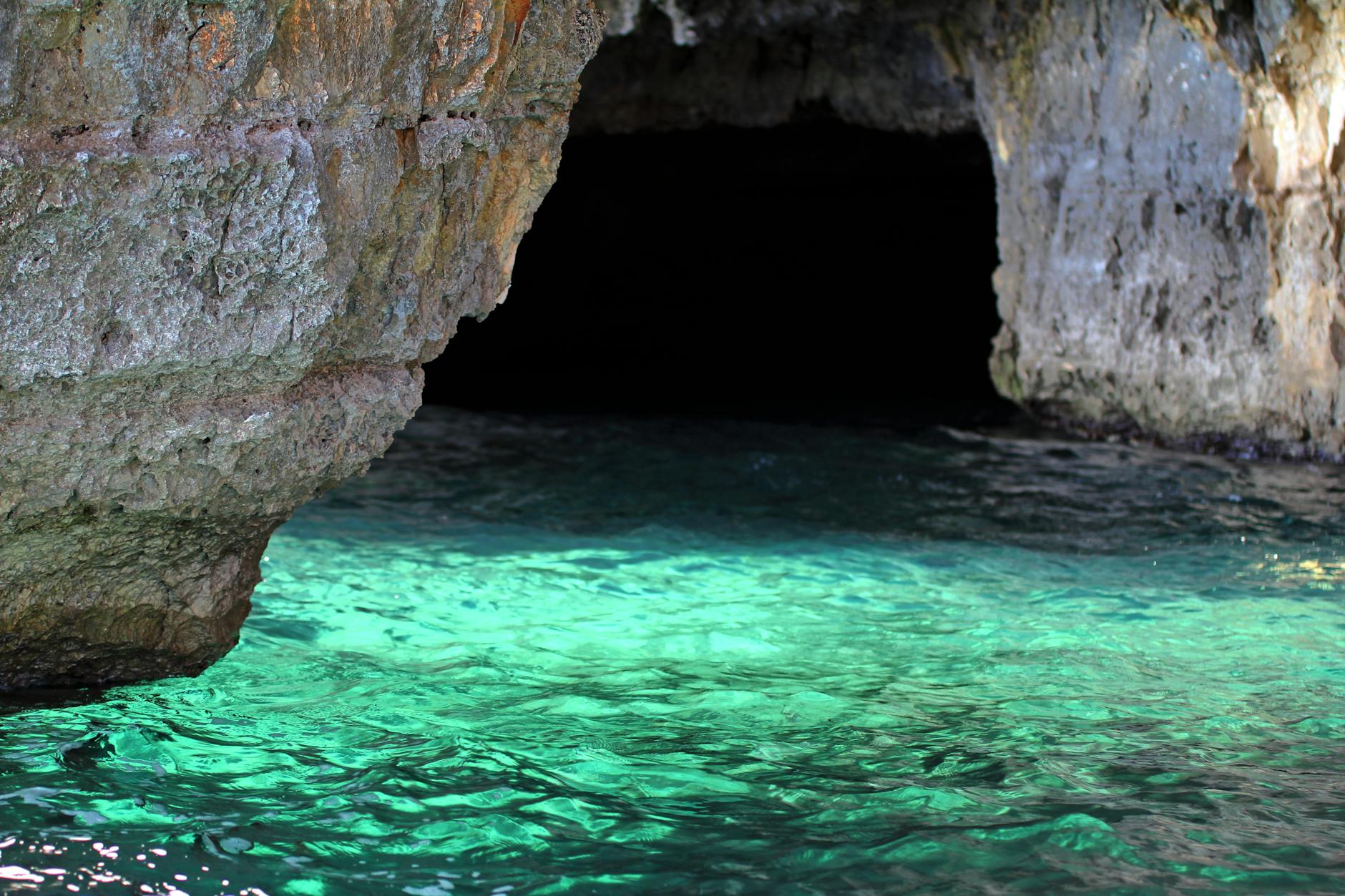
If you want to never be seen except by the bravest of the brave, you’d paint your mural on the wall of an underwater cave.

Photo by Francesco Ungaro on Pexels.com

Then again, maybe you’re not about any of those things.

Possibly you want to enjoy your own art and don’t care much for an audience. Make some art and keep it in your sock drawer. Ain’t nobody looking in there but you.

Rule number whatever is this: make your own thing. Copying other people’s art is fine, to a point. It can help you be artistic. It doesn’t make you an artist though. An artist has to have a measure of creativity, and a dose of originality. The ability to make your own art will give you a sense of accomplishment as well as the satisfaction of knowing you can make what no one else can. Art cred is found in the thing no one else thought of doing—until they saw yours.

Photo by Following NYC on Pexels.com

Learn and Grow

Photo by Zainab Aamir on Pexels.com

Once you’ve written it all down, everything you know, you can empty your brain, you can start over. Go back to kindergarten and learn your numbers. Learn how to draw a big letter A and a small letter a. Learn not to eat crayons. Dont even stick them in your mouth.

Maybe you’re a quick learner, you can skip a few grades and jump right into Junior High (some places call it a middle school, though they haven’t bothered to change the sign out front that says John Fredrickson Kennedy Junior High—no wonder everyone who goes there is confused).

So now you’re going to Junior High, named, ostensibly, after a past president, but you’re not there to learn about presidents. This time you want to learn about girls or boys, or whatever the opposite of what you are is. Here in this place, you’ve entered that stage of life when the hormones will make you forget all scholastic facts. What you’ll remember are all the horrendous jokes everyone repeats on a daily and weekly rotation.

You’ll soon grow too mature for all that puerile nonsense. Once you’ve grown mature enough you’ll pack up and move away to college. In college there will be plenty to learn, though not all of it will be what is taught. You’ll be forced to use your powers of deduction and observation. You’ll know to observe all the other students. It won’t take long to see who has the right idea and who is faking it. Some of those wandering around campus are still putting crayons in their mouth or walking about with a mouthful of obscene jokes. These will probably be good to avoid. Avoid the latent thumb-suckers and the pessimists who find sadness in every inch of life. Aim toward the happy crowd, and find out why. Observe their reasoning and employ your own reasoning for yourself. Get along in your new school, get a good degree and move on with life. Make that degree pay. Settle into a healthy life. If you want, you can marry. When you reach the right age, empty your brain and start over.