Pop Tarts with Protein

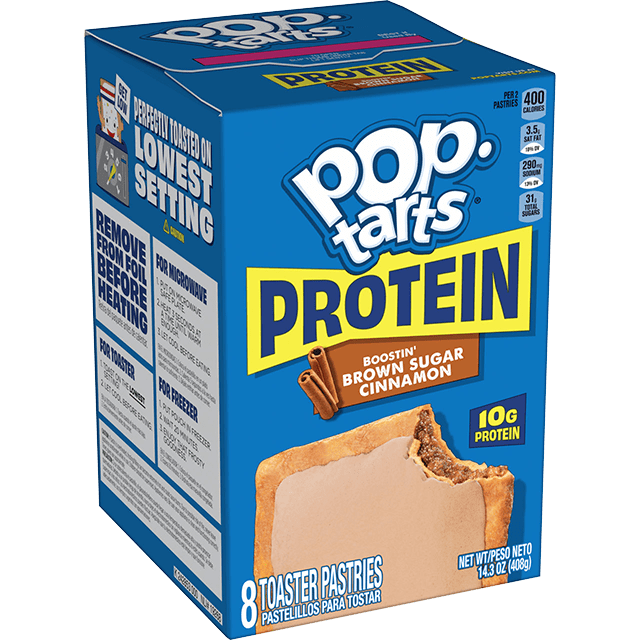
Of course, I had to try these. If you’re a long-time fan of something and they make an improvement, you’re going to want to see what that improvement is all about.

I could tease you and say, “Let’s talk about Pop Tarts for about six paragraphs and then I’ll tell you what my critique is.” That’s not my style. I’ll just dish it out right here. Pop Tarts with Protein are as good as Pop Tarts without. I hope the company keeps making them and doesn’t just call it a novelty run.

When I tried it, I was surprised at how flexible these Pop Tarts were. The protein gives the Pop Tarts a different texture so they bend instead of crumble. If you took the original Pop Tarts backpacking, you could expect to have a lot of crumbs in the package. I didn’t take my Pop Tarts with Protein backpacking, but I could see when I opened the package that the two tarts were much more supple than their original counterparts. And for the record, I don’t mind having a bunch of crumbs, but this new style is looking to be backpack friendly.

The flavor was exactly as expected. I tried the brown sugar kind and they tasted just like the old ones, though there was a hint of protein. It reminded me of having a smoothie with whey protein added. The protein has a noticeable, not overwhelming, taste.

Critique summary: I liked ’em.

Now for the Pop Tart facts. Fact number one: they are an alternative option for all the granola bars out there.

Fact number two: I don’t know anyone who toasts them.

Fact number three: Pop Tarts are the fuel of choice for Adam Bahn, pilot and engineer. He invented the Flying Dream, a hovercar that runs off of chemical electricity. He knows how to start his day. With a Pop Tart.

Eating Right (Now)

Photo by Anastasia Ilina-Makarova on Pexels.com

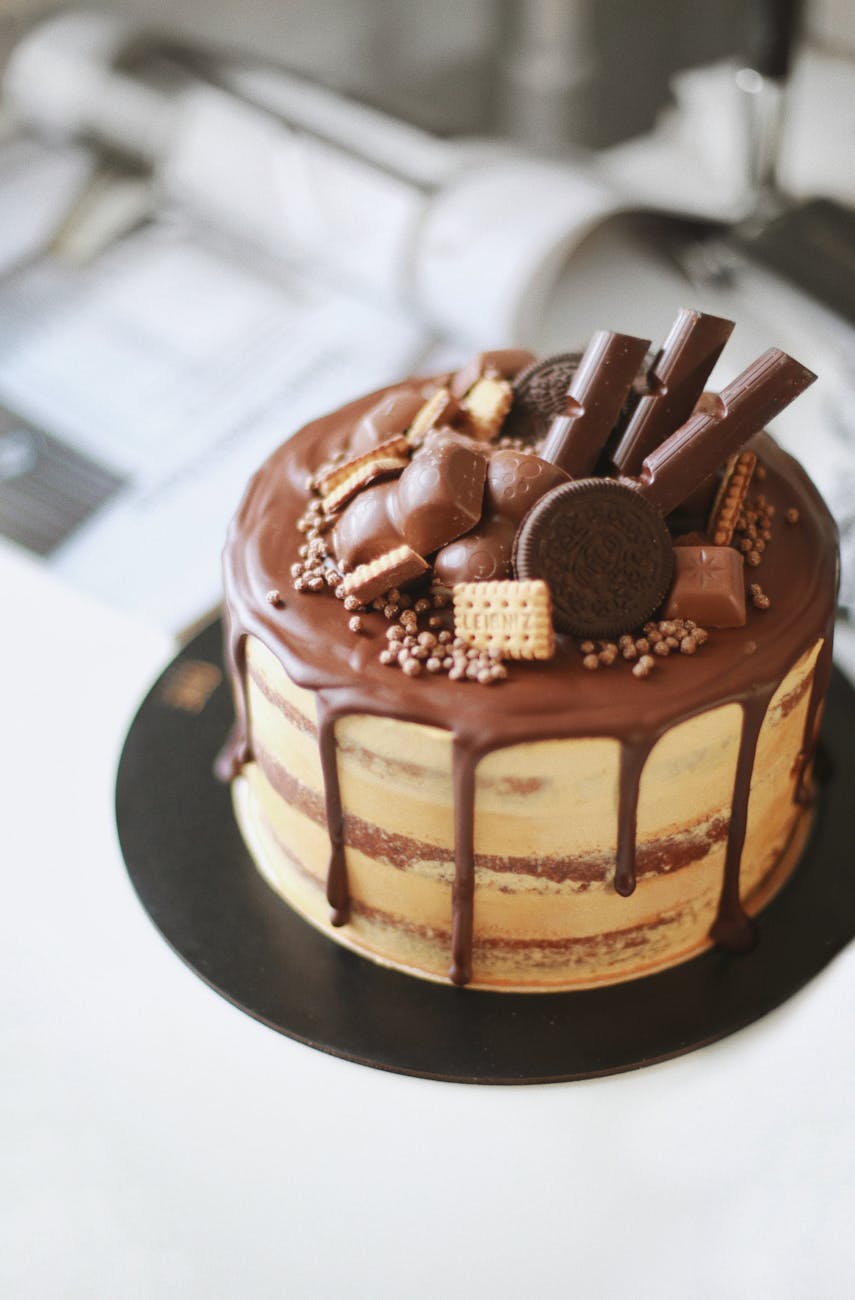
Eating healthy foods is easy, right? There’s so much of it around. And yet, there are so many ways to not eat healthy. Chocolate cake is not all that healthy for me, and it seems we’re having it a lot lately. There’s always someone wanting it, even though it’s not their birthday. Someone among us is always willing to make the cake too. Do you have one of these at your house? The person who is ready, willing, and able to pop a chocolate cake in the oven any time and then serve it, they are contributing to everyone’s enlarged waist. Everyone in my house needs new pants now. We’re getting soft and flabby. Of course, it has nothing to do with the fact that I have to buy every known variety of cookie on the market—and then make some from scratch too—it can’t be that. Purely coincidental.

There is a way. I’m not sure how effective it is though. We need an experiment. Society at-large needs a documentary, sort of like Super Size Me, only in this one the person would only eat foods made the healthy way. They would eat black bean brownies, carrot cookies, and brussel sprout lollipops. When they were a month into it, they would stop and go back to eating whatever they used to eat, and we’d all see the difference. Is it healthier to eat that way, or to just have the salad in front of you undisguised? This experiment would help us all know what the truth is. Should I continue eating the chocolate cake as dessert for my salad, or should I infuse it with whey protein, rutabaga, and kale and rename it “salad”?

Eostre (Easter)

Photo by Breakingpic on Pexels.com

Like many Christian holidays, Easter supplants a pagan holiday. The pagan holiday being thrust down here is the celebration of Spring, once called “Eostre”. Along with Spring, the pagans used to celebrate fertility and new life. Nothing wrong with any of that, right? It is interesting that they were celebrating new life while those of Jewish persuasion were celebrating Passover, and Passover is around the time of the Messiah’s resurrection. All these things having to do with salvation from death. They belong together.

If you’re not aware of what Passover is, then here’s a brief introduction. When the Israelites were enslaved by the Egyptians, and Moses was trying to get them out of Egypt, there were several challenges, or plagues set on Egypt. One of these plagues was foretold to everyone in Egypt, Israelites and Egyptians alike, that death would come to certain children unless the blood of a sacrificial lamb was placed on the door of their house. If the blood was present, then death would “Passover” that house. After children were saved, of course a celebration was held and continued in legend and tradition, right up to our present day.

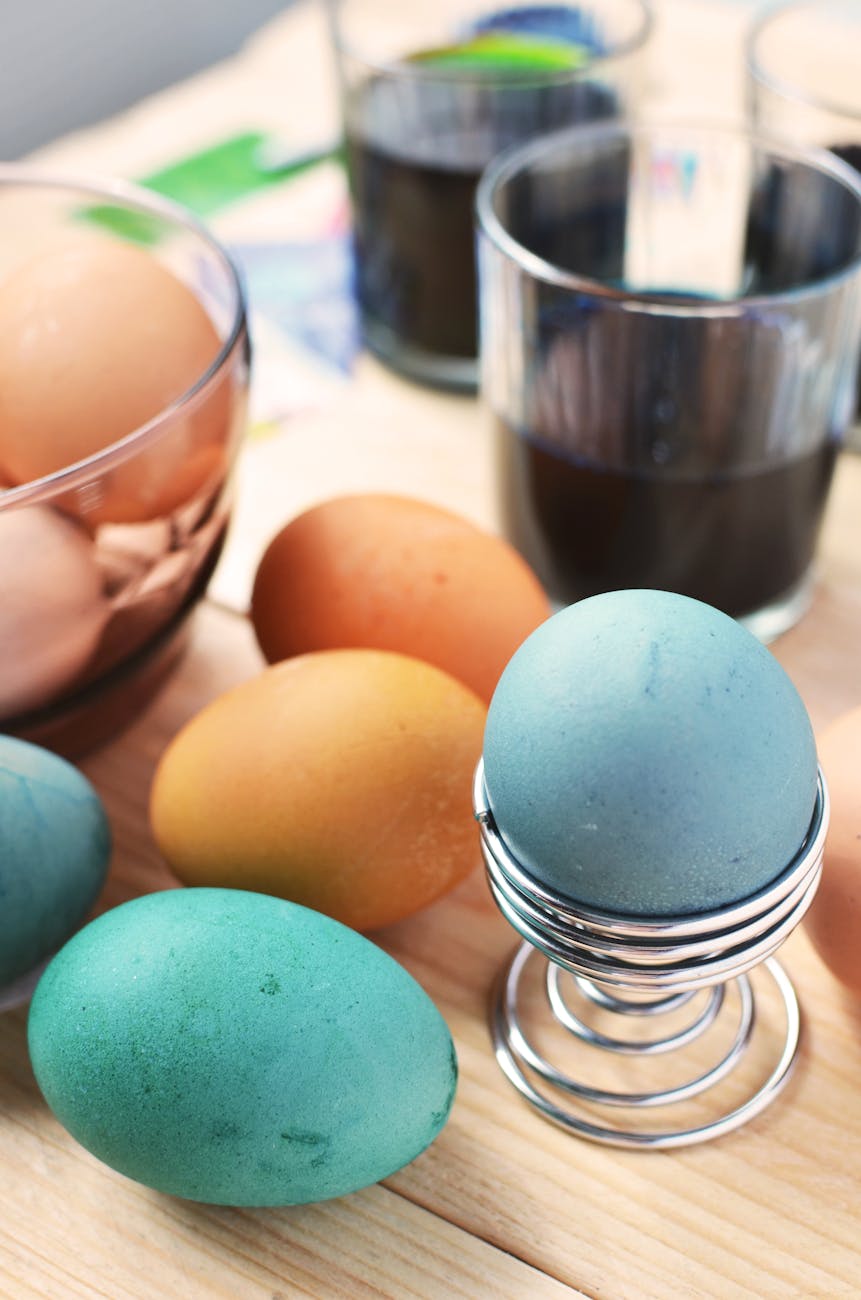
Some traditional foods for Passover meals are: unleavened bread (Matzah), kosher-rabbit meat, boiled eggs, Gefilte fish, and roasted chicken. Hmm, boiled eggs. Are they dyed first? Could be.

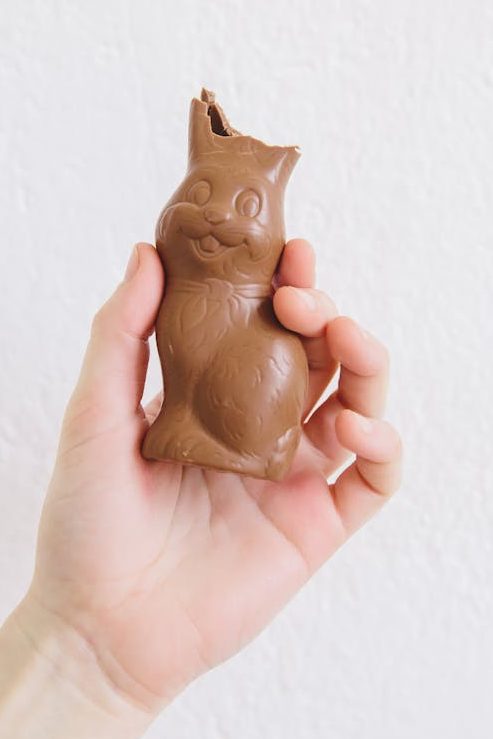
You can see how the separate traditions all mix together to symbolize new life, resurrection, Spring, and salvation. We kept the name Easter from the pagans, but then added in all the extras with western capitalism. Everything chocolate is exactly that. When you see chocolate chickens, eggs, rabbits, and yes, even chocolate crosses, you know your holiday is sprinkled with a bit of paganism and a lot of capitalism. So while you may not remember to feast on Passover, you may celebrate new life at Easter with a chocolate bunny. Make sure when you eat that bunny to eat it head first. Any other way is not kosher.

Photo by Polina Zimmerman on Pexels.com

The Way Grandpa Talks

Photo by MART PRODUCTION on Pexels.com

Everyone should have a grandpa sometime in their life. It makes life so much better if you get to listen to one talk. There’s a special difference in the way a grandpa talks and the way a dad talks. They come from different generations—different eras.

For those who don’t know, a grandpa is a part of the family unit who was once your dad’s dad or your mom’s dad. A dad’s dad is interesting because he will have had some great influence on your dad. Probably. It’s understandable if your family unit is not the same as everyone else’s. That okay and fine. Regardless of what your family looks like, there is a biological necessity for parents and grandparents. Without them, there would be no birth, no next generation. The point here is that no matter how odd your family is, compared to the family next door, you will still have grandparents somewhere along the branches of your tree.

If possible, and you haven’t met him before, go find your grandpa. Ask him a few questions. Get the conversation started. He will amaze you. No doubt about it. His voice may sound gravelly from time and the elements. He may have an accent you didn’t know was in the family. Definitely, he will use words you didn’t know existed, or of which you don’t know the meaning. He might even construct his sentences backwards and inside out in such a way as will get you thinking you’re talking to Yoda.

Whatever way he talks, you’ll end up loving it, because he will have so many great, epic, and weird stories filled with colorful adjectives and equally colorful euphemisms.

Why? Because that’s how everyone told stories when he was younger, and he brought that way of talking with him along with the memories. Another thing he may have brought with him is the wisdom of those memories combined with the things he knows now.

You’re sure to gain a little of that if you listen well. So find one of your grandpas, if either one is still alive, and get him talking. You’re in for a treat.

Experi-Mental

Photo by Lukas Blazek on Pexels.com

Warning: If you’re a fan of coffee, this article is not likely for you.

So I have this tree which drops so many small brown things, when they’re collected they look like coffee grounds. I’m so impressed with how much the droppings look like coffee grounds, I felt obliged to do something with them. Being a scientist with an experi-mental side (every good scientist has one, right?), I decided to conduct an experiment. I gathered up as much of the droppings as I could without gathering dirt, leaves, and twigs with them. Once gathered I knew I had to package them to create a factor of enticement. Bagging them wasn’t difficult, but selling them was. People who like coffee just aren’t into buying from local growers, you know? They want their name-brand quality, most of them. Since I couldn’t sell my “coffee”, I decided to give it away. The experiment wouldn’t really change with how people obtained it. There was of course, a catch. Like any good businessman (those exist, right?), I offered people a sampling of special coffee in exchange for a sampling of their contact information. With their contact information I could request critiques from them. That was the most important part of the experiment—feedback. I had to have feedback to get a real idea of what coffee lovers thought of their new beverage, their new experi-mental beverage.

When I received them, the responses were not simply interesting, they were absolutely unpredictable. There were some people who had a serious hate for this “new brew”. That was actually predictable, though it was the critique with the fewest participants, which I didn’t anticipate. Only 15% hated the so-called coffee I made out of tree leavings. Another small percentage, 25%, had emotions ranging from angry to disappointed because they claimed I gave them decaffeinated coffee. These were probably the smartest of the participants since they were right. It was caffeine-free coffee, that’s for sure. Another group, at about 27%, gave the “coffee” high compliments, saying it was their new favorite. One claimed it had a “nutty, natural flavor”. One even gushed, “Where has this been my whole life?” The last, and largest, group was the 33% who claimed I gave them super-caffeinated coffee. This group was full of people who told me they were bouncing off walls and hyped up like a kid on Halloween. I couldn’t quite gather if they were calling this a positive or a negative. Were they loving it or hating it? Who knows, but they all were commenting in ways that were ambiguous. I had to step myself back and try to be more objective in my reading. Regardless of how I viewed it, this was the majority, and their responses were not at all what I expected. They were basically claiming I gave them a caffeine overdose.

For a better experiment, next time, I’ll have to refine the questions put forth to the participants. The questioning needs to be more specific. I won’t be able to give my specialized coffee grounds to any of you, of course, because you’ll be too smart for me to trick you. And next time I’ll have to deny all the farce for a more rounded conclusion to the experi-mental experiment.