On The Wall

frisking

Battles lost and battles won;

We’ll be bones before we’re done.

Two men shouted, “Get yourself a gun!”

Then turned and shot each other for fun.


No one said, “Life is easy.”

Except for me,

Right now.


No one said, “Let’s be sleazy.”

Well, maybe someone,

Who reads out loud.


Whenever you think you got it all

Figured out. “I’m on the ball!”

Your masterpiece seems a childish scrawl,

When you see what’s painted on the wall.

No-Home-November

photo-1522179093820-877c047293f8

A man with a No-Shave-November face came up to me yesterday and demanded that I give him cash. I immediately asked him what I owed him and he stopped in his tracks. He wasn’t expecting such a response.

I told him I’d cut him a check on Thursday and we both laughed. Nobody uses checks anymore—not even the homeless. The homeless do have pets though.

An increasing number of those without homes these days will have some sort of animal companion. This particular gentleman had a small dog in the cart he was pushing around. Dogs are quite popular, especially small ones. Cats, less so. Cats don’t like being put on a leash, so they aren’t nearly as popular with the nomadic culture.

Since this hairy guy was feeding two, I figured I’d give him a couple bucks. It wouldn’t go very far, but then, it wasn’t going to do much for me either. I would certainly skip a snack, or seven snacks, to know the man and his dog might eat. Here’s to hope and the hereafter. May we all have homes in the hereafter.

Not too long ago, in the same part of town, I saw a woman with a snake. Life is full of patterns and this is a recurring one in my life. Why do women like to have snakes as pets? Not all women do, for sure. But whenever I learn of someone who has a pet snake, it’s never a man. Ive never known a man to have a pet snake, but I’ve known at least ten women who’ve opted for the slithery variety of pet, though I’ve only recently started wondering why.

“And what do you feed your pet snake?”

“It eats mice.”

“What kind of mice?”

Live ones.”

“So you’re a woman who doesn’t mind handling mice? Or snakes? A woman who doesn’t cringe at the fact that a mouse is not dead when it gets devoured? No? Hmmm…interesting.”

Talk about destroying the stereotypes of women in my mind. I had the apparently goofy misconception of women being afraid of critters—especially the critters that slither, or the kind of critters with whiskers and tiny feet.

Yet another stereotype I had in my mind was that homeless people don’t care about much. Not true at all.

The woman cared about her snake. The man with the big beard on his face and the mini-dog in the grocery cart cared about his dog. There was a dog food bag in the cart with the dog. I couldn’t see the dog food, but I didn’t happen to see any people food anywhere, or even human food bags. So the dog was probably not neglected. I’d extend the benefit of the doubt for him.

I guess once you learn something like this, you change your mind, and that’s exactly what I did. I stopped thinking of homeless people as careless. They have all the same cares, and can be as caring as anyone who just happens to have a house to sleep in.

Makes it easier to care about them, doesn’t it? Once you realize they’re all, in some way, exactly like the rest of us.

Noise

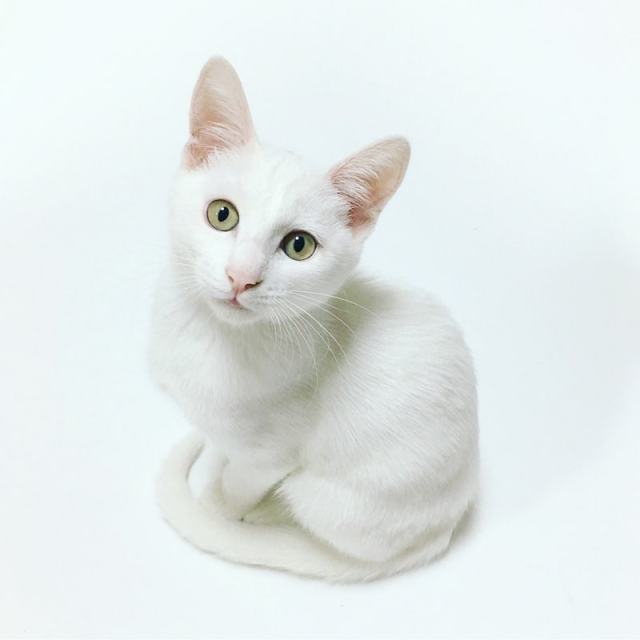
noisecat

Noise is everywhere. It’s in your left ear. It’s in your right ear. At work, in your house, at the zoo, on the street, at the movie theater, at the store, in the deli, at the fish market, in your shoes, on the train, at grandma’s house, at the library, even in your mind—noise is everywhere.

One of the troubling items on noise’s long list of negative characteristics is its loose definition. To define noise, you can’t take a poll. No two people define noise the same way. A baby crying? Noise to one. Delicate, lovely, superior sound to another. The sound of rushing water? Pleasant, soothing, whispering waves to one. The fright of approaching death to someone else.

Noise is so annoying. We can’t even define how noise annoys!

Another item on that list of annoying characteristics is the fact that it is so hard to find the source. Have you ever heard a low rumble from somewhere inside the earth and wondered where that noise was coming from? Have you ever heard the ticking of machinery and weren’t sure there was machinery near you? Have you ever heard the ocean and been miles from it? There are many noises we hear but can’t locate the source.

To locate the source would be to define the noise, wouldn’t it?

For this we should conduct an experiment. Like any experiment we need control. In any experiment we need to reduce the amount of material we measure so we can get more specific data. Because noise is so pervasive, we’ll have to limit the amount of noise we actually hear during the experiment. What’s the best way to limit noise? Earplugs.

Alright, get your earplugs ready. Whatever kind you like best. The fitted rubbery kind are nice, especially if you have different sizes of ear holes than most people you know. The foam kind can work really well too: squeeze them and they form to fit your ear holes as they expand. Or maybe you don’t want earplugs at all. If you prefer the noise-cancelling headphones, that’s fine. Get those on.

Once we’re all ear-plugged and ear-muffled up, let’s start listening.

Hear anything? Not much, right?

This is the first step in discovering where the noise comes from. By cancelling the majority of the noise around us all, we can focus on the leading cause of noise. What do you hear?

What? You can hear your own breathing, your own heartbeat, your own belly gurgling? So that’s it! There’s the ultimate source of all the world’s noise, right there. It’s you!

Like a Sunrise

photo-1550713450-9636b0d14c38

Do the negative things we think make us grouchy? When we’re grouchy, do we show it? When we’re hopeful and loving, do we show it?

Negative thoughts don’t just happen, do they? When you get a negative idea, does it originate inside you, or does it first start somewhere else and then grow inside you as you think about it? When you entertain a downer idea, do you feed that idea? Feed it with more thoughts like it? But then where do those thoughts come from? Are they inside you already, or are they born from the first idea? Do thoughts breed? Can they reproduce? Can ideas germinate? Pollinate? Can you weed the garden of your mind? How does that work? And is it fun work? Wouldn’t it be amazing if we could see it as a thrill to remove a negative thought from our mental vocabulary? Double positive! You would get to the way of optimistic thinking and have fun doing it!

Where do positive thoughts originate? In Hell or Heaven? If there was no positive thinking, would there be no Heaven? If there was no negative thinking, would there be no Hell? If there was no life on Earth, would there be no “sunrise”? Would there be no morning? If there was no songbird, would there be no music? Would there be no “nature”? Aren’t you glad there is nature, a songbird, a sunrise, and a morning?

Gratitude comes from somewhere. Where does gratitude originate? Is it in the recognition of our need? Is it in the realization of what exists? Do we see the alternative? Do we recognize all of these at once? Do we see our need for the thing, recognize that it exists, and focus on the fact that the alternative isn’t with us? For instance, is gratitude for the songbird because a person needs to hear the tune, finds gladness in the existence of the beautiful song, and is appreciative that the bird doesn’t sound like a crow? Gaakh! What if all birds sounded like crows? Gaakh! Gaakh! Then along came a new species, a bird that whistled in more than one tone? The birth of the new species would be like sunrise after a long, cold night.

At least, for the person who needed the song, it would be like sunrise. What if you somehow started to love the sound of crows? Then would the birth of the songbird feel as if it was the sign of the end for the crows? Could a person grow attached to their sorrows? Could a person feel needful toward negative thinking? What happens when you get there, to the point where your negative thoughts are like part of your essential being? Would weeding the mental garden feel more like amputation? Would you get all positive, but not even recognize your new optimistic self?

The point, of course, is just how deeply do you allow yourself to go into those negative thought waters? How weedy do you let the garden get? If you continually loved the darkness, would you eventually dislike the sunrise? Does pessimism really love itself? By definition, it wouldn’t act in self-love. Pessimism is self-loathing. Optimism is at least hopeful toward oneself.

Gratitude, then, is like the knowledge of a sunrise. It’s appreciation and expectation all wrapped up in one. Gratitude is a characteristic of the optimistic.

Bobsled: Last Great Ride of the Season

bobs1

The last great ride of the season. Mountain biking is my favorite method of meditation. If I had video, you’d probably wonder how anyone could really meditate while going that fast around the variety of obstacles and challenges: trees, boulders, mud…

bobs9

bobs8

…natural and man-made ramps…

bobs4

…and abandoned cars.

bobs3

How does someone meditate in the face of physical action? You might ask such a question. And I might turn it around and ask, “How can you not?”

This one is called Bobsled. It’s a swooping downhill section of a series of trails. The swoops and the jumps all encourage a rider to go fast. If you’ve ever felt out of control, even in a familiar situation, then you’ll have an idea of how this one feels.

bobs6

Bobsled is named well. It truly feels and looks like a bobsled track.

bobs10

At the bottom there are some abandoned cars with dirt ramped up next to a few of them so you can jump over them, if you felt the urge. (Yes, I did.)

bobs5

Well, it was fun. As you can see, the trail even has some photogenic appeal in the fall with multi-colored leaves blowing around everywhere. Soon it will be covered in snow, and if I want to ride I’ll have to go to Mexico. (There’s poetry in there somewhere. No, I didn’t.)

Until then, here’s cheers to Bobsled!