What Do You See?

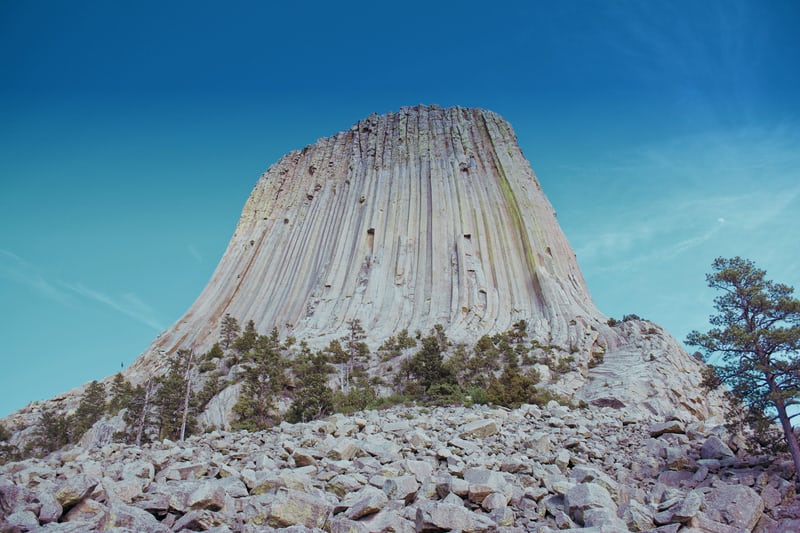
You see heights. I see rollercoasters.

You see rocks. I see playgrounds. Every rock is a challenge, but in different ways to each of us.

Maybe we see the scene differently. It doesn’t mean either perception is wrong. It only means we come from different places; we see what our own environment encourages us to see.

Possibly we see what we want to see. Our will-power, will-strength, inserts itself into our reality. The mountains shift from dangerous to entertaining according to our will.

This is true for life in general, really. You can look at a pandemic and find great things in it, or you can lay on the floor and weep for all the torment you feel.

I still don’t think either of these is wrong, though one may not be very beneficial for you.

Can you believe there are both kinds of people out there, right now, doing the above? There is someone out there crying because everything is “going wrong”. There is another someone out there finding solace despite losing loved ones, grinning despite the loneliness of social distance, and keeping their chin up even though the economy has taken a dive.

It only takes a moment, if you’ve been pessimistic, to shift your perspective in the slightest. The steep crags could become less intimidating if you think of them as a beautiful, scenic view.

Can You Relate?

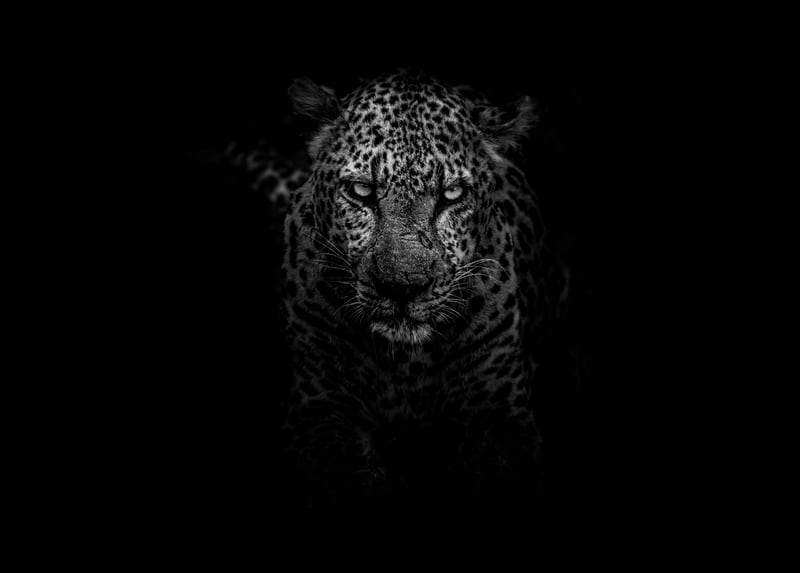
The cat wants to know: Are you writing?

You’re a writer.

You’re always writing something, whether it’s a list, stream of consciousness prose, a song, a poem, a novel, a screenplay, graffiti on a wall.

You love the smell of stationery and stationery stores, paper, pens, printers, and sharpened pencils.

Ideas for what to write come in floods. You can’t possibly use all the ideas you have. You have lists of ideas everywhere: in the notes function on your phone, on scraps of paper, in a notebook. You’re always forgetting ideas too. You think, “I should write that one down,” then you don’t write it down and forget it. Happens all the time, doesn’t it?

You’re always mulling over something you’ve written, editing it from all angles, adding juicy adjectives, trading one word for another, removing excessive adjectives, and rotating word positions like rotating tires on your car. Okay, not like that. Nobody rotates the tires on their car that often.

You can’t help but read everything you see with words on it (repeatedly, such as that sign on the side of the road that you’ve read over and over again even though you know what it says, or the label on the inside of your refrigerator, or the graffiti outside on the trash bin—your eyes refuse to avoid it).

You love words and languages. You may be fluent in other languages and you for sure know multiple phrases in multiple languages. Latin, French, Spanish, Navajo, you don’t have a narrow attitude toward languages, just an unstoppable love of all words everywhere.

You’re critical but progressive—you may change your harsh opinions of some things once you see the beauty of them. You have a cringe-worthy desire to edit everyone else’s writing.

It’s likely that you have a pet—and if you’re a stereotypical writer, it’s a cat. Are you a stereotypical writer?

You can see the beauty of less than desirable things like blotty pens, old books, and ancient word processors.

Books draw you in and collections of books draw you in sevenfold. You have haunted, and shall always haunt, libraries (though you would probably arrange the books by a different method than the present one). You love collections of books. Wherever books are, you will be.

And you love the sounds of a typewriter. The cadence of tiny hammers and the ratcheting sound of the carriage return is pure bliss to you. Sure, a keyboard on a computer is an amazing thing, but your soul loves the visual and audible thunder of a typewriter being manipulated.

I Died A Foam Sword Death

photo-1579860823000-fe1f66864d88

by Justin

Already a dragon had eaten nine men. Unwilling to give in to death, they thrust their legs out his belly and drove him around. Still fearsome, the beast was more so with eighteen more legs. One of the men was directing the head so it lolled from side to side as if the beast was drunk or chasing flies.

The dragon was perhaps only a merry distraction compared to the armies of the enemy waiting for us on the far hill. Though they were far away, I swear I could smell the lifeless stench of their breath. Within their ranks were many vile shouts, obscenities aimed at our own army. Like the men who had been swallowed by the dragon, we refused to be intimidated. Their stench and their vitriol and their awful stench was no match for our determination. They would find out soon enough. They were racing down the hill toward us.

Between our two armies was a valley, a deep chasm, and a bridge. Neither their army, or ours, owned the bridge. We all knew it would be a decisive piece in the battle, that bridge. Our side began the race too.

It seemed we had the advantage at first, but soon their army appeared to be gaining ground faster than ours. We couldn’t let them take the bridge, so we rushed on.

As both armies reached the bridge, it should have been obvious to us all what would happen, but we missed the obvious. We charged onward, fearing nothing. The throng before, and the throng behind, pressed forward so swiftly we met in the center of the bridge. Then the hated breath of the enemy was even more evident. Evidently horrible.

To the man, we were slaves. Slaves to our eager bloodthirst. Not a one of us in the press could draw a weapon. Not a one of us could move. We were pressed so tightly as to be disarmed.

As there was no battle to be had, none could be won. The chasm was only one obstacle. Our zeal another.

photo-1460194436988-671f763436b7

The game was called a draw. Referees came and split us all. “Go home. Go home,” they said.

Everyone obeyed.

Nine men climbed out of the dragon, putting it away in the portable storage unit. Sixteen men disrobed, t-shirts beneath their armor, stowing their gear in duffle bags. Twenty more men and women put cardboard spears, knives, swords and shields in their vehicles in the parking lot. Fifty more disappeared, back over the hill from whence they came.

My own gear went in the back hatch of my 1973 Gremlin. Spaulders, hauberk, gauntlets, everything went in the car—even the hardened foam sword of which I was so fond. I threw the sword in only to misjudge the distance. It hit the passenger seat, bounced off, spun around and “stabbed” me in the heart. I was so surprised I lurched backward and fell in the dirt, the foam sword falling next to me. I lay there for a moment laughing at myself. The indecisive battle was now won—in favor of the other side.