Recently I’ve noticed a great deal more books in the library about people like me.
Clearly I can attribute the new abundance of books to you and your attention to the plight of souls like mine.
We are sidelined. Pushed to the darker corners because we’re a little different, but only in some ways.
We are outcasts. Society at large would rather not have us around, and why? Only because we take what we want and give nothing back? What’s so wrong with it? Every rich man and business man and politician does the same.
Excluded for our lusts and passions, we often watch social gatherings from a distance. Watch, and wait, for our chance to participate.
But now I’ve let my imagination take me on a tangent. Forget the watching, and the waiting. I’m excited for this new chance to read about others like me. All these fascinating books you’ve collected are mine for the devouring. Well, for the reading, I should say. Devouring is such a strong word.
Thank you, thank you, thank you, for stocking the shelves at the library with many books about vampires.
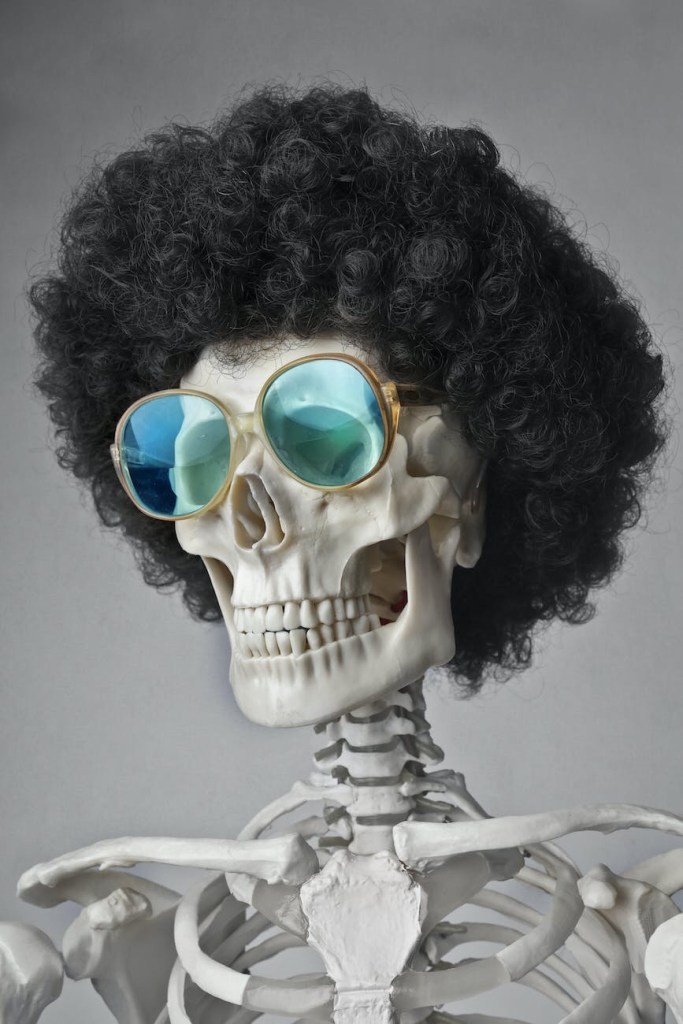
I’ll be reading them voraciously in the comfort of my room (on the top left, in the picture below).
Generally taking under five minutes, a great music video has hyper-elements for your entertainment.
First: music. Music is the highest form of entertainment. It can have the lowest score in the “diminishing return” factor, meaning its ability to amuse you doesn’t diminish over time or over repeated consumption. You can usually listen to a piece of music more than once without losing interest. The exception to the rule is any song which gives you an earworm.
Second: eyecandy. If a music video has some eye-catching scenes, you can watch it repeatedly.
Third: brevity. It doesn’t use up a lot of your time. You can fit in several in one day, if you have more time.
Of course, none of this means every video is worthwhile. The following is a list of some from YouTube which contain all three of the elements mentioned. Look them up for some great and non-time consuming fun!
Lately it’s nearly impossible to find a good book. I tried A Pho Love Story because it looked kind of normal on the front and the premise seemed real enough. It did have a good solid foundation: a boy and a girl with competing restaurants across the street from each other fall in love. It could work. The writing was just not there. It didn’t pull me in and keep me in the story. The writing was all awkward and twitchy, like someone with three elbows trying to keep their hat on in the wind. There’s a good lesson here for beginning writers. Don’t try to switch points of view. Even if your point of view is all first person and you’re switching from one character to another each chapter, it isn’t something a reader will want to read unless you have an incredibly lyrical style or some other crutch to prop up such a dated idea as switching characters every other chapter. Or the story might survive if you have a writing style that taps the vein of popular culture and gives the reader that type of ichor infusion they’re looking for to wash away the usual bloodless drudgery of their life. When writing fiction, try to be entertaining.
Another I tried to read but couldn’t continue was titled Ten Low. I couldn’t get into it for similar reasons. It too was written in first person style. I’m going to just jump in here and blame Stephanie Meyer for this trend. Her vampire diary about the girl who met the Seattle vampires who glitter because they’re under constant cloud cover was successful enough to spawn a horde of books with characters similarly impotent as that Edward vampire who apparently had zero vampiric qualities as well as zero of the seven deadly sins (weird, right?). How in the literary world does a vampire inspire fear if he or she doesn’t do anything but play sports in the rain? Inspire is the correct word here. The book titled Ten Low had a main character which did not inspire. There was nothing about the main character that was at all interesting—and if you’re writing a book in first person, you might as well put them six feet under. It’s like writing about a corpse. It doesn’t do anything. What reader picks up a book to read about a character doing nothing? Don’t readers want to be entertained? Don’t we choose the fiction books because they’ll be less mundane than all the mundane things surrounding us? But if a book doesn’t deliver that, where will we turn for our entertainment? To movies? Books like this could kill the literary world and encourage more people to stop reading altogether.
Not all the books I’ve picked up recently have been poorly written. I read one titled The Music of Bees and it was lively and fun. The writing was flowy, smooth, and yes, lyrical. The book was quick to read and was indeed about all aspects of bees. Caring for bees isn’t even a passing interest of mine, but this book was written well enough to keep me reading. I’d probably give it four or five out of seven stars. It was fun to read. On the other hand, I’m probably not going to read it again.
I also read one called Mean Baby by Selma Blair. It was kind of funny, but not as funny as all the reviews I read about it suggested. All in all it was an average memoir. When I go to read a memoir I have an expectation of some embellishment and chest-thumping. There were moments of that in this book, but not as much as others in the biography section, which is a good thing, and yes it has my endorsement for this reason. I skipped a few parts because some of her stories were dull. Not all were dull, just a few. She’s had an interesting life, regardless of whether I’m interested in it or not. The main reason I picked up the book is because it details how she was given what could only be called an amateur diagnosis. She was called a mean baby because she was always pulling mean faces. They weren’t mean faces, they were pained faces. She, like so many people, was assumed to be one thing, when she was really another. And this sort of misdiagnosis is only going to be more common in the future as we see psychology getting softer and softer, allowing the street diagnostics to reign.
Last, and best of all, was a book titled Like Water by Daryl J. Maeda. It’s actually a very interesting book despite being written in textbook fashion. The first chapter hits the premise of “transpacific” human currents really hard. Like any textbook, you’ll want to put the book away forever and never hear the word transpacific ever again, but if you don’t you’ll be rewarded. The author lets up on his pet theory of transpacific currents and digs in to the details of the life and times of Bruce Lee. There are some fun facts in the book such as: for one of Bruce Lee’s films, his salary was the biggest portion of the budget, second biggest was the budget for fake blood. This book, of the five I’ve mentioned, is the only one I could highly recommend.
Recently, I was caught up in the vortex of a Writer’s Digest article. It promised a smattering of literary agents and contact info for the same.
As I was perusing, I noticed each and every one of them had pronouns next to his or her name.
Cute, I thought, but unnecessary.
First off, the only reason I would use a pronoun is when I’m talking about someone behind their back. Generally, I try not to do that. The only thing that comes to mind immediately is if I was using an example, like so: His profile picture made him look like an underfed clown.
I definitely wouldn’t send an email with he or she in the text. Could you imagine getting an email written to you but referring to you in third person?
“Would he like to represent me? Recent works are attached to this email for his reading judgment.”
OR
“Her interests are my interests. She likes sci-fi, and I like sci-fi.”
Comes off a bit on the creepy side, don’t you think?
It reminds me of Golem.
Anyway, I wasn’t impressed with any of the agents listed. For one thing, all the pronouns chosen were the same. Nothing wrong with being honest. However, my creativity radar was on the lookout for an agent with the sense to throw a smart-ass pronoun in there, for good measure. You know, like…
WHOM…
And the kind of agent I’m looking to represent me would follow it with a prime example.
“Who? you say. He whom doth enlighten with erudite epigrams.”
Overwhelming is a word which makes it difficult for me to find anything it describes.
For every challenge in life there’s a tool to overcome it. For every trial, there’s an equal or better blessing.
People around me are the same. I don’t see anyone who is overwhelmed by their troubles.
An example of this is a man I know who has a crippling case of arthritis. He has many reasons to be happy. He’s married to a brilliant, devoted woman. He has great, caring children. He even has grandchildren who boost his spirit. He has a job and friends. He also has an optimistic perspective on the afterlife. Why not? Jesus really does save everyone, whether it’s now or later.
Another person I worked with was confined to a wheelchair for the first part of his life. No one ever heard him complain. He tried to brighten everyone’s day whenever he was around. After years of cheering up others, he got some cheering of his own. He got some prosthetic legs. Soon after, he got a new job. As a grocery store cashier, he stands proudly in those prosthetic legs.
One other person I know had a terrible childhood. She decided long ago she wouldn’t let it haunt her, or even define her. She grew up to be a scientist. Now she teaches other people science.
Life is what you make it, for sure. But if you think you have troubles, just look around and you’ll see the good things outnumber the trials.






 Xenosthesia.com