I love learning the art of anything, whether it’s cycling, or writing, or photography. Or keeping yourself out of the downward spiral of litigation. And of course, when I learn things, I feel obliged to share. One thing I learned recently is that many lawyers dislike law suits as much as their clients. Apparently they dream of a better job. The other thing I learned recently is that it can be a long process to put together a book cover. You want it to be relevant to the book. You want it to catch the eye of the book buyer. You want it to be free of any copyrighted content such as a photo that came from an unreliable source. I learned that there are photographers out there who put their photos on the infonet without any indication of copyright (are they not legally obligated to do so?) and wait to catch someone using it—then they sue the user. Fortunately, I didn’t learn this the hard way, and hopefully you won’t either. One way to ensure nothing will ruin your ride is if you take the photos yourself. Another is to find sites that release photos that are not sole property of any one person. Still another is to hire an artist to create the book cover for you, straight out of their imagination. Think of this knowledge as putting on the helmet before you go for that ride. Ride, and write, safely!
Mommy, Where Do Zombies Come From?

As every child who has ever asked there momma knows, zombies come from spores. Spores are little, bad gobs of dusty fuzz that cling to the following: the undersides of plants, chewed up gum on the sidewalk, dried up mushrooms, carbon dioxide molecules, socks, and of course in the vapor of an electronic cigarette. With every gust of wind, or careless step of a traveler, the spores are released from their hiding places and sent to the air around us where they are breathed in by unwary and unlucky souls. Whoever breathes in this toxic dust will first act as if they’ve been drinking with slurred speech and lowered inhibitions, then soon after they will start to search for brains. This is because the spores will be consuming the infected individual’s brain, turning them into a zombie, and so he, or she, will have a sudden urge to find brains elsewhere. So, keep your eyes out for those around you who appear to be searching for something they no longer have—and watch your step!
A Wistful List

What you should do sometime in your life:
Get grass stains on your knees.
Grow your own food.
Learn to swim.
Learn to ride a bike.
Learn to fly.
Get kissed.
Get dumped.
Hear a joke that makes you laugh so hard you cry.
Tell a joke that makes somebody laugh really loud.
Believe in a mystery.
Solve a riddle.
Fall in love.
Lose a pet.
Defend someone who is unpopular.
Smell the rain coming from a mile away.
Smell a rose.
Write a list of wistful things. (Such as this one.)
The Authentic Writer

AND WHAT MAKES YOU A WRITER? Symptoms of being a writer are these: You’re always writing something, whether it’s a list, stream of consciousness prose, a song, a poem, a novel, a screenplay, and/or graffiti on a wall. You can’t possibly use all the ideas for stories that you have. You love the smell of stationery and stationery stores, paper, pens, printers, and sharpened pencils. You’re always mulling over something you’ve written, editing it from all angles. You can’t help but read everything you see with words on it (repeatedly, such as that sign that you’ve read over and over again even though you KNOW what it says, or the cover of the Reader’s Digest that sits on the back of the toilet–your eyes refuse to avoid it). You love words and languages, and you know multiple phrases in multiple languages. You’re critical but progressive–you may change your harsh opinions of some things once you see the beauty of them. It’s likely that you have a pet—and if you’re a stereotypical writer, it’s a cat. Regardless of that last jab, you love cat pictures. You can see the beauty of less than desirable things like blotty pens, old books, and ancient word processors. You have haunted, and shall always haunt, libraries (though you would probably arrange the books by a different method than the present one). And you love the sounds of a typewriter; that cadence of tiny hammers and the ratcheting sound of the carriage return is pure bliss to you.
Advice to young men
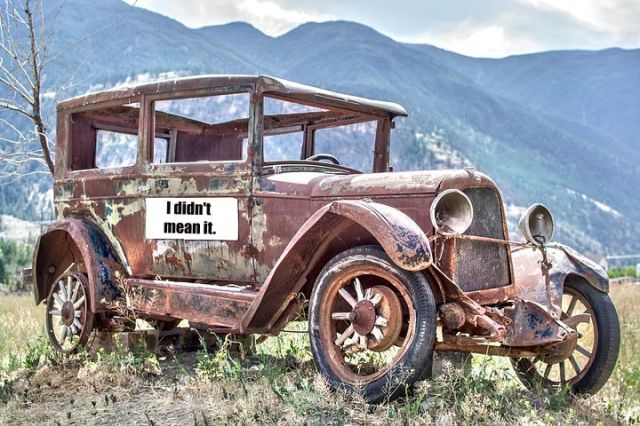
For young men: Be aware that no matter how many words you use when you’re talking to a young woman, she will consider it a conversation. For instance, if you were playing a sport with a girl and you wanted her to know that it was fun and that she was a valuable member of the team and you made the mistake of saying, “I like you as a friend,” even though the emphasis was on the “you”, there are several things wrong with this phrase. The first one is the use of “I” at the very beginning. When a girl hears you say “I” at the beginning of a sentence, she is immediately fully invested. You are talking about yourself to her. When she hears you say “I,” she reasons that marriage is imminent. The next word twists the deal. “I like,” is what she hears and the conversation has taken a turn for the weird. First of all, you’re talking about your feelings. This is where all girls live: in their feelings. But you said, “like,” so now of course she is imagining you breaking off the wedding, but still wanting to date. You’re going steady with her now, especially when she hears, “I like you…” Now you have put “I” and “you” in the same sentence, so she has hope for that marriage thing again. But then—oh, then—you drop the bomb in her lap and tell her to defuse it or die. You might be thinking, “I didn’t say that.” But you did. You said, “…as a friend.” Suddenly she’s reduced to friend not bride status. So even though by “friend” you meant “valuable member of the team,” she understands that you are breaking up with her. Now don’t get confused and think that you need to spell everything out for every girl everywhere. Fewer words are still better. Short vague phrases such as: “You’re awesome!” and “You’re Olympic!” will work in most cases. Beware of anything that might sound covert. Young women live in the covert. They’ll analyze your every word. They’ll see through your cover-ups. Also, never ever say, “You’re sweaty,” for reasons we will discuss later.