
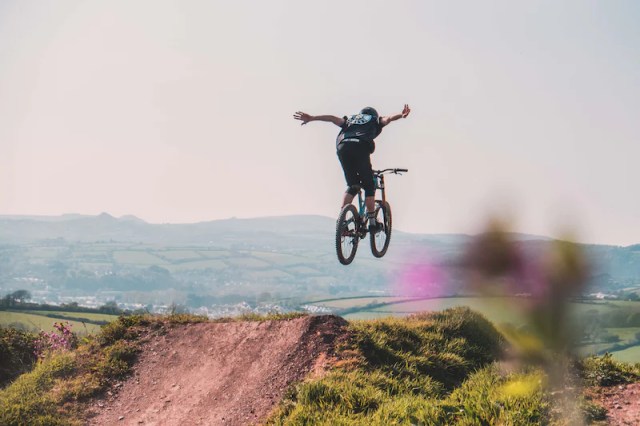
As I was doing a variety of things at the BMX park on my mountain bike, I was wondering if I was really “mountain biking.”
Then, of course, I saw my own inability to pin down what exactly mountain biking is. This is how research happens.
Though the first bicycle was made in 1871, mountain biking itself all started on Mount Tamalpais in Marin County, California in the 1970s. The idea may have come before that with Europeans going cross country on their road bikes, but that style could also be considered “Cyclocross” or “Gravel Biking”. Rather than using road bikes, these guys in California initially used cruisers: a kind of bike which allows the rider to sit more upright instead of hunching over for aerodynamics. Also, the pioneers of mountain biking didn’t necessarily go cross country or race in a circle, but instead went up the mountain and then came back down.

While cyclocross in its infancy introduced cyclists to offroad riding, there was not much experimentation with the bicycle form. Mountain biking, on the other hand, seemed to spawn new ideas for bikes faster than you can say, “I think I just ate a bug!”
The man often credited for inventing the sport of mountain biking, Joe Breeze, even made his own frames, then soon got into making them for others. And there he goes down in history again for being the first person to sell a mountain bike.
Joe Breeze’s designs for bikes were soon mimicked by other bike builders, and the sport started to gain notice in other parts of the world. It wasn’t long before the tires got fatter and knobbier. It would take quite a few more years before bike builders started to get their ideas from motorcycle engineering. Once that happened though, then mountain bikes got mega-shocks, hydraulics, and disc brakes. Not all of these “advancements” were truly advances, but that’s an opinion I’ll save for another article.
The point here is that much of what defines “Mountain Biking” is the style of the bike. There are a few variations, but the standards are these:
1. Relatively straight handlebars which extend to slightly wider than the rider’s shoulder width.
2. Frame designed to take more abuse than a road bike or a BMX bike.
3. 1 to 30 gears depending on rider’s preference.
4. 4 to 12 inches (100 to 300 millimeters) of suspension travel.
5. 6 to 8 inch disc brakes, when discs are used.
6. Wider tires than a BMX bike. Thinner tires than a motorcycle.
That last one isn’t always true anymore with the popularity of “Fat Bikes” taking the mountain biking sport into the winter months. When they say fat, they do mean fat. Some fat bikes have tires thicker than elephant legs. The design is like riding a snowshoe, so it makes riding in the snow that much easier.
There’s also an honor code in mountain biking. With the honor code there’s a set of rules; an etiquette, if you care to call it such.
The rules are these:
1. Right of way on every trail belongs to: hikers, horses and their riders, and bikers going uphill.
2. Stay center trail through puddles, or jump over the puddles.
3. Leave no trace.
4. If you break it, you fix it.
5. Announce yourself when coming up behind anyone.
6. Don’t stop mid-trail.
7. Offer help to anyone and everyone who has stopped off to the side of the trail.
Some of the acronyms for biking in general can be confusing. Here are a few to help you get an idea what everyone is talking about:
ATV: All Terrain Vehicle
BMX: Bicycle-like Motocross
CX: Cyclocross
MTB: MounTain Bike
MX: Motocross
Some of the lingo, phraseology, lexicon of mountain biking can be confusing too, if you haven’t been in the middle of it. So the following are a few favorites:
Armor: head to toe padding for those who fall down a lot.
Baby Heads: referring to the size of certain rocks on the trail.
Berm: a humped section of trail built to make cornering easier; also, sometimes forming a jump (berm jump).
Cheater: an electric bike. This is prejudice, of course, and it only really applies if the e-bike is in a race.
Drop: an overhang with a sloped transition below it.
Full Suspension: a bike with front and rear suspension.
Gap-jump: this comes from BMX riding, and it refers to a jump with a landing and a lot of air in between.
Hardtail: a bike with front suspension, but no rear shock absorber.
Ladders: wooden-runged ladders usually laid horizontal to add interest to some trails.
Single Track: a trail with only enough room for one bike, because the path is as wide as a tire.
Skinnies: initially just a log to balance on, a skinny can also be other items, such as ladders, made barely wide enough for a tire.
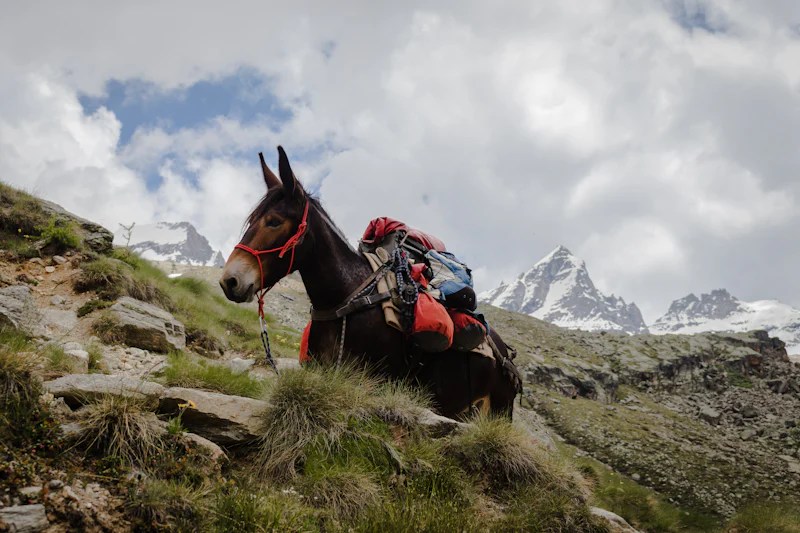
One thing to note is that there is a lot of debate over e-bikes. There are many arguments for and against. There are even trails which prohibit e-bikes. The term “cheater” is derogatory—used as an insult mainly by those with the stamina to get up steep hills. Even though I prefer to climb by my own power, I recognize not everyone has the stamina, some because they are just starting, others because they’ve aged out of stamina. Regardless of where everyone is on the spectrum, the prejudice neglects to acknowledge one critical historical note—the fact that many of the most beautiful single track trails were made by motorcycles. The offroading motorcycle community came long before the offroading cycling community, and the mountains have the evidence to prove it. I’m not the only one who looks at the e-bike as just another motorcycle. There are many more varieties of electric motorcycles now than ever before. This is my reasoning for wanting e-bikes on the trails—because they can be a great tool for making trails for everyone. Also, if you were taking shovels and other tools up to repair trails, an e-bike would be a smart option. The next best option after an e-bike would be a pack animal, like a mule.
The summary and fine-tuning of the definition is simple. Mountain biking is riding up the mountain, then coming back down, requires a mountain bike, and requires one to have manners on the trail.
 Xenosthesia.com